
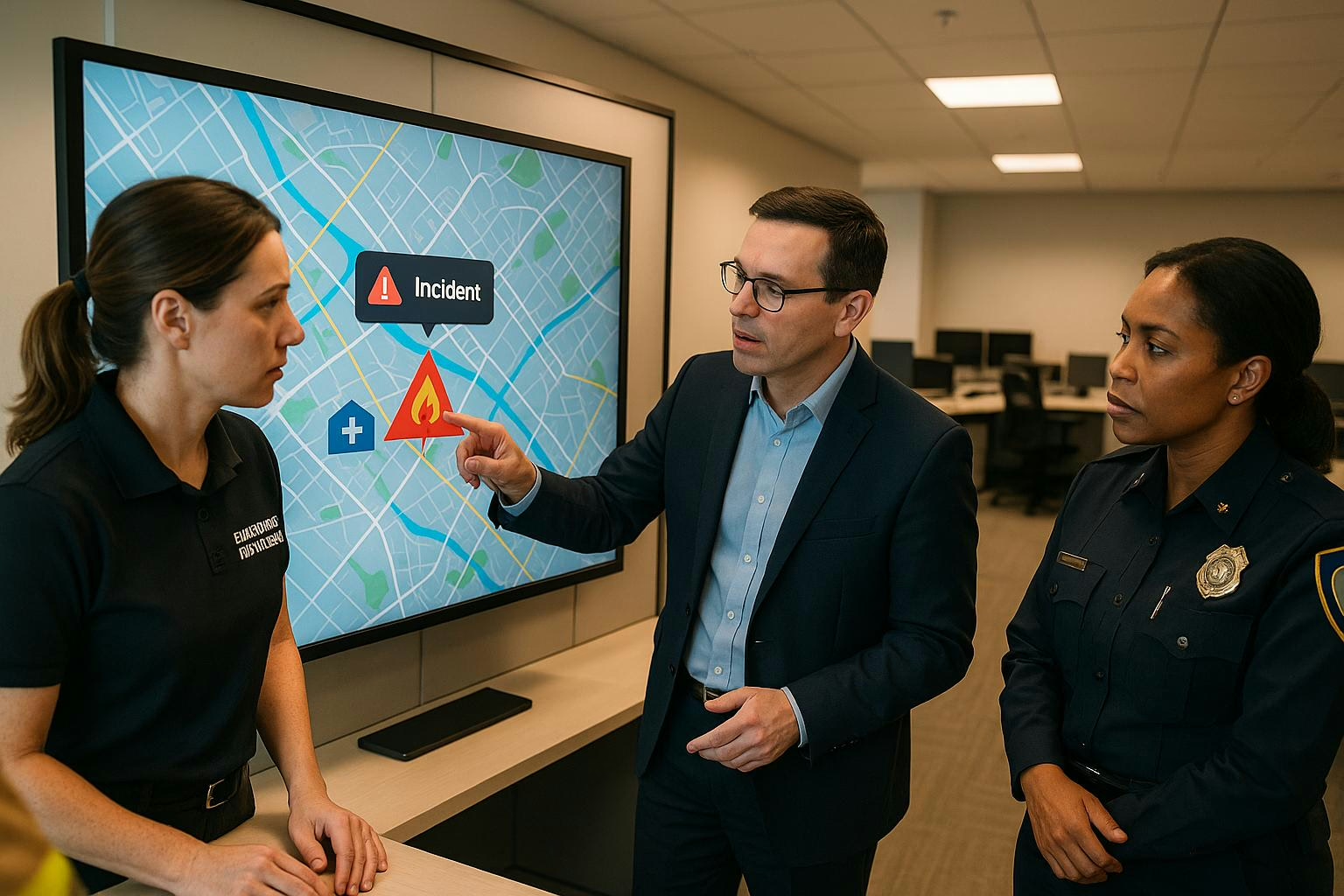
Role-based training focuses on preparing emergency leaders with the exact skills they need for their specific roles, using realistic scenarios and hands-on exercises. This approach ensures faster decision-making, clearer role definitions, and stronger team coordination. Organizations using role-based training report a 15% increase in engagement and a 34% boost in retention rates.
In contrast, general training provides broad knowledge but often lacks practical application, leaving leaders less prepared for high-pressure situations. While general training is cost-effective initially, it can lead to slower responses and unclear responsibilities during emergencies.
Key Takeaways:
- Role-Based Training: Tailored, scenario-driven, and practical; improves response times, role clarity, and team coordination.
- General Training: Broad, theoretical, and less specific; slower decision-making and potential role confusion.
Quick Comparison:
| Criterion | Role-Based Training | General Training |
|---|---|---|
| Decision-Making | Scenario-based, faster responses | Theoretical, slower in emergencies |
| Role Clarity | Defined roles, better communication | Unclear roles, potential confusion |
| Practical Preparation | Immersive drills, hands-on experience | Lacks realistic simulations |
| Organizational Impact | Higher engagement and retention; faster onboarding | Delayed readiness, lower engagement |
Role-based training demands more resources but delivers better preparedness and outcomes for emergency leaders.
1. Role-Based Training for Emergency Leaders
Role-based training reshapes how emergency leaders prepare for crises by zeroing in on the specific skills and knowledge each role demands. This tailored approach ensures that training aligns directly with the responsibilities leaders face in their day-to-day operations.
Decision-Making Effectiveness
Emergency leaders often need to make split-second decisions that can save lives or prevent a crisis from spiraling out of control. Role-based training sharpens these decision-making abilities through realistic, scenario-driven exercises. For example, the Phoenix Fire Department implemented scenario-based modules that focus on leadership and decision-making under pressure. As a result, they reported measurable improvements in response times and tactical choices during emergencies.
Tabletop exercises and simulations provide a safe space for leaders to practice critical thinking and problem-solving without the high stakes of a real crisis. These exercises help participants internalize protocols, rehearse their responses, and build confidence. Research supports these benefits, showing that such training enhances knowledge, confidence, and the ability to apply new concepts effectively, as demonstrated across all four levels of Kirkpatrick’s educational evaluation model.
Role Clarity and Coordination
Clear role definitions are crucial in high-pressure situations to prevent confusion and ensure smooth operations. Role-based training helps leaders fully understand their responsibilities, which improves communication and streamlines workflows across teams. Regular drills that involve multiple departments allow leaders to see how their roles intersect with others, fostering a stronger understanding of how their actions contribute to the overall response. When leaders are confident in their roles, they act with greater decisiveness and take ownership of their responsibilities.
Realistic Scenario Preparation
Theoretical knowledge alone often falls short in real-world emergencies. Role-based training bridges this gap by immersing leaders in realistic scenarios where they must make critical decisions under pressure. For instance, during a hazardous materials simulation, leaders may need to coordinate evacuations and allocate specialized resources – tasks that mirror real-life challenges. These exercises allow leaders to practice repeatedly across a variety of situations, from routine incidents to rare catastrophic events, helping them develop deeply ingrained response patterns. Mistakes made during these simulations become valuable learning experiences, with constructive feedback helping leaders refine their skills without putting lives or resources at risk.
Organizational Impact
The advantages of role-based training extend well beyond individual growth. Fire departments that use scenario-based drills report faster response times, better resource allocation, improved incident outcomes, and stronger team communication and cohesion. This type of training also streamlines onboarding for new employees by focusing on the specific competencies their roles require, allowing organizations to deploy them more quickly and see a greater return on their training investment. For government agencies and emergency response teams, role-based training is essential for maintaining regulatory compliance and reducing operational risks by ensuring every team member understands their responsibilities.
Next, we’ll explore how general training measures up against these targeted benefits.
2. General Training for Emergency Leaders
General training typically relies on broad, lecture-style instruction. While it provides a baseline of knowledge, it often falls short when leaders face the unpredictable, high-pressure nature of real emergencies. Unlike the role-specific methods discussed earlier, this approach overlooks the nuances and practical skills that are crucial in critical situations.
Decision-Making Effectiveness
Theoretical training dominates general instruction, leaving little room for hands-on practice. This imbalance hampers the ability to make quick, informed decisions during an emergency. The result? Slower response times and less effective tactical choices – precisely when every second matters.
Role Clarity and Coordination
General training often fails to clearly define roles within a team, which can lead to confusion during a crisis. Without a solid understanding of their responsibilities, team members struggle to coordinate effectively. This lack of clarity disrupts communication and creates inefficiencies, making it harder to execute a seamless response when it’s needed most.
Realistic Scenario Preparation
One major drawback of lecture-based training is its inability to replicate real-world emergencies. It doesn’t capture the urgency, complexity, or unpredictability of actual crises. Leaders miss out on the chance to practice under pressure, leaving them unprepared for scenarios like hazardous material spills, large-scale fires, or rare catastrophic events. Without immersive, hands-on training, they lack the confidence and experience to navigate these challenges effectively.
Organizational Impact
The shortcomings of general training ripple through the entire organization. Its heavy focus on theory and lack of role-specific clarity can slow down operations. Onboarding new emergency personnel takes longer, and teams are less prepared to respond efficiently. This not only delays workforce readiness but also reduces the overall impact of training investments. Without breaking information into actionable steps or addressing compliance needs, general training risks disengagement, missed opportunities to identify weak points, and diminished team coordination during emergencies.
sbb-itb-ce552fe
Strengths and Weaknesses
When it comes to preparing emergency leaders for high-pressure situations, both training methods – role-based and general – have their own set of advantages and challenges. Understanding these strengths and weaknesses is key to making informed decisions about training strategies.
Role-based training stands out for delivering measurable benefits. Organizations using this approach report 15% higher employee engagement and 34% higher retention rates, showing its impact on keeping skilled emergency personnel motivated and on the job. By focusing on role-specific instruction, this method eliminates unnecessary material and allows leaders to quickly gain the skills they need for their responsibilities, resulting in faster workforce deployment.
This approach also sharpens specific skill sets and establishes clear operational boundaries. Leaders who train with scenarios tailored to their roles gain an intuitive understanding of the challenges they’re likely to face. This not only helps them resolve problems faster but also encourages creative solutions. Such precision ensures better returns on training investments.
However, role-based training has its hurdles. Developing customized curricula and materials for various leadership roles requires significant upfront investment. Additionally, as emergency procedures, technologies, and threats evolve, organizations must continually update these materials, demanding ongoing resources. Another potential downside is the risk of siloed thinking – if role-based training isn’t complemented by cross-functional learning, leaders may struggle to see the bigger picture of emergency response systems.
On the other hand, general training takes a broader approach, emphasizing foundational knowledge that applies across various emergency scenarios. This method ensures leaders share a common understanding of terminology and principles, which can be useful for fostering alignment within teams. It’s also more cost-effective in the short term, as a single curriculum can serve multiple roles. For new leaders, this approach offers a valuable introduction to the overall framework before they specialize.
But general training has its limitations. Without hands-on practice, leaders miss out on developing the muscle memory needed for quick, decisive action under pressure. The lack of role-specific scenarios often leads to unclear role definitions, which can create confusion and coordination issues during real emergencies. Additionally, its theoretical focus leaves gaps in practical skills that may only become evident in high-stress, real-world situations.
Here’s a side-by-side comparison of how these two methods perform across key areas:
| Criterion | Role-Based Training | General Training |
|---|---|---|
| Decision-Making Effectiveness | Builds problem-solving skills with role-specific scenarios; enables faster, more creative solutions | Offers broad knowledge but lacks scenario practice; slower decision-making in real time |
| Role Clarity and Coordination | Defines roles clearly, reducing confusion and improving communication | Lacks clear role boundaries, leading to potential confusion during emergencies |
| Realistic Scenario Preparation | Includes immersive, scenario-based drills that build muscle memory for critical actions | Relies on theoretical knowledge without practical simulation; less effective in preparing for high-stress situations |
| Organizational Impact | Boosts engagement by 15% and retention by 34%; accelerates onboarding and improves response outcomes | Promotes broad alignment but delays ROI; can overwhelm participants with too much information |
The success of role-based training hinges on the quality of its design and execution. Poorly crafted programs can underperform compared to well-executed general training. To maximize its potential, organizations need skilled instructors, realistic scenarios, and thoughtfully developed curricula.
One of the standout benefits of role-based training is its ability to uncover weaknesses in emergency response systems. Through role-specific exercises, leaders gain insights into system limitations, enabling better decision-making and revealing operational constraints. Tabletop exercises and drills often highlight overlooked issues, such as communication breakdowns or resource shortages, that could undermine an effective response. General training, by contrast, tends to miss these nuanced vulnerabilities because it doesn’t replicate the specific conditions that expose system flaws.
Ultimately, the choice between these two approaches depends on an organization’s goals, resources, and the unique needs of its emergency leadership teams. While role-based training often delivers superior outcomes, it demands a greater investment of time and resources. Aligning the training method with organizational priorities ensures leaders are equipped to handle crises with both tactical precision and strategic insight.
Conclusion
Organizations that implement role-based training often see better engagement, improved retention, and quicker, more effective responses during emergencies. Unlike general training, role-based approaches focus on realistic scenarios, helping participants develop muscle memory and make decisive choices when it truly matters. These benefits create a stronger foundation for emergency readiness.
To maximize the impact of role-based training, focus on realistic simulations paired with constructive feedback. Tabletop exercises that mimic real-world conditions can uncover communication gaps and resource limitations before they escalate into critical issues. Clearly define roles and develop tailored learning paths that help leaders grow through hands-on, practical examples.
The results of role-based training are clear: faster response times, better outcomes, and more efficient operations that save lives and reduce disruptions. By committing to this approach, organizations can build teams that are confident and fully prepared to face any challenge.
Training works best when paired with advanced security technologies. Together, customized training and modern security measures create teams that not only understand their responsibilities but also perform seamlessly under pressure. At ESI Technologies, we understand that protecting lives and assets demands both specialized training for emergency leaders and cutting-edge solutions to achieve the highest level of readiness during crises.
FAQs
What are the advantages of role-based training for emergency leaders compared to general training methods?
Role-based training gives emergency leaders a clear, practical edge by focusing on the specific demands of their roles. Instead of relying on generalized, broad-stroke content, this type of training zeroes in on the unique challenges and critical decisions leaders encounter during emergencies.
By targeting these role-specific needs, this approach sharpens preparedness, boosts confidence, and strengthens team coordination. It ensures leaders are equipped with the precise skills and knowledge required to handle high-pressure situations effectively. When training mirrors real-world responsibilities, emergency leaders are better prepared to act swiftly and decisively when every second counts.
What are the best strategies for implementing role-based training for emergency response leaders while staying within budget?
To make role-based training both effective and cost-efficient, organizations should design programs that align closely with the specific responsibilities of each role. This way, participants focus solely on learning skills that are directly applicable to their work, improving productivity while cutting down on unnecessary spending.
Start by identifying the most critical roles and their training priorities. From there, use a mix of learning methods – like in-person workshops, online courses, and scenario-based exercises – to strike the right balance between quality and affordability. Incorporating technology, such as simulation tools, can also offer realistic, hands-on practice without the high costs of live training sessions. When training programs are tailored to organizational goals and resources are allocated wisely, role-based training can achieve meaningful results without blowing the budget.
What types of scenarios best prepare emergency leaders for high-pressure situations?
Realistic, role-based scenarios designed to mirror real emergencies are a powerful way to prepare leaders for high-pressure situations. These scenarios zero in on decision-making under stress, team coordination, and quick problem-solving. Think simulated natural disasters, active threat situations, or large-scale public safety challenges – each offering a chance to test and sharpen crucial skills.
When leaders train in controlled yet lifelike settings, they can enhance their critical thinking, build confidence, and fine-tune how they manage resources and communicate during a crisis. This hands-on approach helps ensure they’re ready to act decisively when every second matters.