
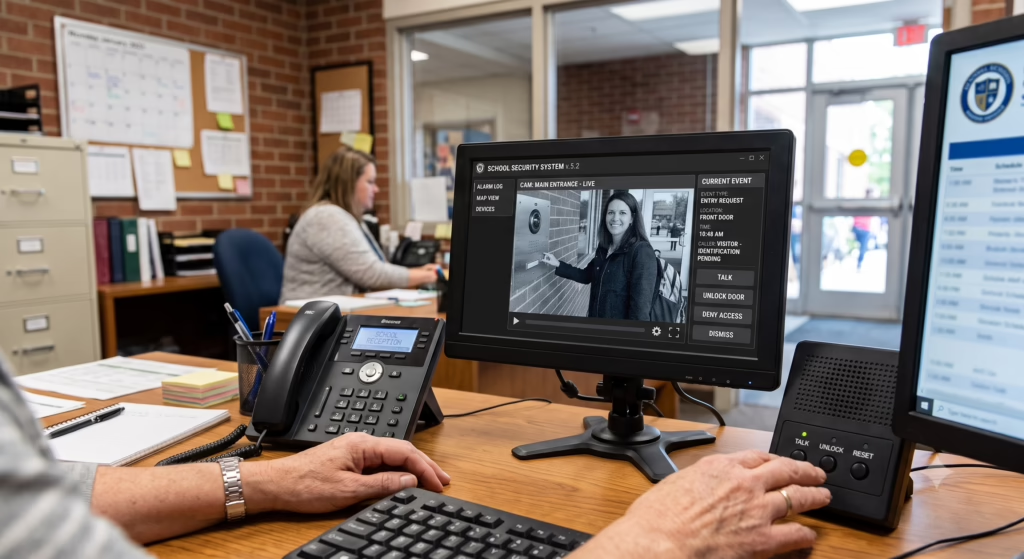
By late summer, most Colorado districts have their building projects scoped and their budgets set. Front-entry security is the one that tends to slip, because it touches the front office, the network, the doors, and the daily routine of every person who walks in. If any of your buildings still route visitors through a propped or unlocked front door during school hours, the fix is worth planning now, before students come back.
This post covers school visitor management: how visitors get into the building during the school day. For the broader access control picture, including lockdown, see our guide to access control for Colorado schools.
What a secured entry vestibule does
A secured entry vestibule forces every daytime visitor through one controlled path. The exterior door stays locked. A visitor enters a small enclosed space, and a second locked door into the building only releases after front-office staff have seen who is there and decided to let them in. Done right, no one reaches classrooms, hallways, or offices without passing through the front office first.
That single-path design is the point. A building can have card readers on every door and cameras in every hallway and still have a wide-open front entrance during the school day, because the main door has to stay usable for parents, deliveries, and staff. The vestibule solves that daytime problem: it keeps the entrance staffed while removing the unlocked door.
How the front-office check-in workflow should work
The workflow has to be realistic for the people running it, or staff will work around it. A visitor arrives and presses a call button at the outer door. Front-office staff see and speak to the person through a video intercom, decide whether to release the inner door, and buzz them into the vestibule. Inside, the visitor checks in, has their ID reviewed, receives a printed visitor badge, and is either escorted or directed to a specific room. When they leave, they check out and the badge is collected.
Every step depends on the one before it. If staff can release the inner door without seeing a face, the intercom is decoration. If check-in happens on the honor system after the person is already inside, the vestibule bought nothing. The most common failure we see is a front office understaffed at arrival and dismissal, exactly when the door is busiest, so the workflow gets skipped under pressure. The design has to account for the busy minutes, not just the quiet ones.
Where visitor management software fits
Visitor management software is a separate layer from the door hardware, and the two have to work together. The software handles ID scanning, watchlist and custody-flag checks, badge printing, and a searchable visitor log. The door hardware, access control, intercom, and camera, controls who physically gets through. The security comes from wiring them into one workflow so staff are not buzzing a visitor in before the ID check has happened.
ESI builds and integrates the physical side: the controlled doors, the electric locking hardware, the video intercom, the entry camera, and the access control platform that ties them together, using systems we are authorized on such as Genetec and Gallagher. Many districts already run a visitor-check-in product at the front desk, and the work is making sure the physical entry and that check-in step are one process rather than two disconnected ones. If a district has not chosen a product yet, that decision and the door work should be planned together, because the sequence of the two doors and the desk determines whether the software gates entry at all.
The design mistakes that make a vestibule less secure than it looks
A vestibule can pass a glance and still fail in practice. A few mistakes come up repeatedly. The inner door gets a simple pull-to-open handle on the visitor side, so anyone who reaches the vestibule can walk straight through without being released. A side path into the hallway gets left in for convenience, which defeats the single door. The intercom camera is mounted where it catches the top of a head instead of a face. Egress and fire requirements get treated as an afterthought, so the locking scheme either traps people or gets propped open by staff who find it inconvenient.
Two of these deserve extra attention. First, free egress and fire-code compliance are not optional; the locking design has to release on alarm and let people out without a key or card, and that has to be engineered in, not bolted on. Second, accessibility: the entry has to work for a visitor using a wheelchair or a walker, which affects door hardware, operator buttons, and vestibule depth. Getting these wrong is what leads staff to prop doors, and a propped door undoes the whole system.
Planning the work before the school year starts
The physical work needs a break in the calendar, so the practical deadline is now. Running new cable, cutting in doors, mounting readers and intercoms, and commissioning the access control all go faster and cleaner when the building is empty. The software and workflow side is more flexible and can be set up or changed after the year begins, but it is far easier to train front-office staff on the full process before the first day than to retrain them in September.
If you are deciding what to tackle across a district before the next year, three questions settle most of it. Which entries need the full vestibule treatment first, usually the main entrance at each building. Whether the buildings should run on one access control platform so credentials, schedules, and reporting are managed centrally rather than building by building. And who administers the system once it is live. Districts across Northern Colorado, in Fort Collins, Loveland, Greeley, Windsor, and Longmont, and across Southern Colorado, in Colorado Springs, Monument, Fountain, and Pueblo, range from a single rural campus to more than twenty buildings, and the right answer scales with that. Colorado's BEST grant program has funded secured-entry and safety upgrades for districts that plan capital work far enough ahead, which is another reason the planning happens the year before the install, not the summer of it.
Front entry is also where a lockdown starts. A vestibule that can lock down on command, tied to a Safe2Tell alert or a staff trigger, keeps the entrance controlled rather than being the weak point. The lockdown side connects to the wider access control design, which our access control guide for Colorado facility managers covers in full.
Frequently asked questions
What is a secured entry vestibule in a school?
A secured entry vestibule is a small controlled space at the main entrance with two locked doors. Visitors enter through the outer door into the vestibule, and the inner door into the building only opens after front-office staff have identified them, usually through a video intercom. It keeps the entrance usable during the school day while removing the unlocked front door that most daytime security gaps come from.
Does visitor management software replace front-office staff?
No. Visitor management software supports the front office; it does not run entry on its own. Staff still decide who gets buzzed in, and the software handles the ID scan, watchlist and custody checks, badge, and visitor log once the person is at the desk. The security depends on staff and software following the same sequence, which is why the door workflow and the check-in step should be set up as one process.
Can a secured entry be added to an older school building?
Yes. Older buildings usually cannot be re-cored around the entrance, so the retrofit works with the doors and walls that exist. Wireless locking hardware, such as Salto, cuts down the amount of new cable a retrofit needs, and video intercoms can often reuse existing pathways. The main constraints in an older building are egress and fire-code compliance and accessibility at the entry, which is why a site walk before design matters more there than in new construction.
When should a Colorado district start planning front-entry upgrades for the next school year?
Start the year before the install. The physical work, cutting in doors, cabling, readers, and intercoms, needs a summer or an extended break when the building is empty, and design, bids, and any grant funding take months ahead of that. A district that begins planning in the fall or winter has time to scope the work, secure budget, and schedule the install for the following summer.
If you manage facilities for a district in Northern or Southern Colorado and your front entries still rely on an unlocked door during the school day, it is worth a site walk before the next year. Call ESI at (970) 999-1681 in Northern Colorado or (719) 602-7336 in Colorado Springs, or use the contact form at esicorp.com to walk through what a secured entry would take at your buildings.