
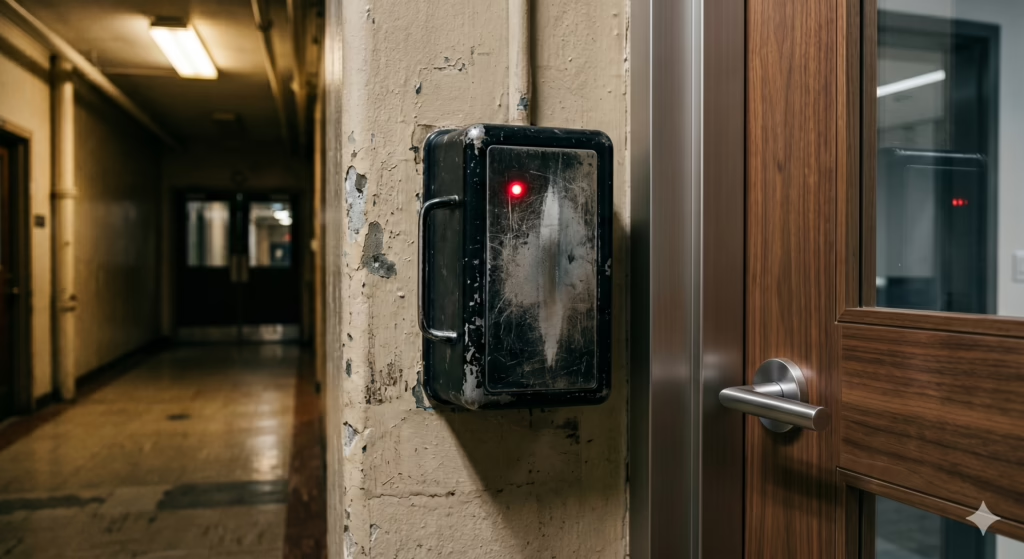
A commercial security system is designed to run for 10 to 15 years. Most don't make it that long without problems. Not because the equipment is defective, but because nobody is maintaining it. Firmware falls behind. Door hardware loosens from daily use. Cameras drift out of alignment. None of these failures announce themselves. They accumulate quietly until something goes wrong at the worst possible time.
This is the pattern we see across facilities in Northern and Southern Colorado: the system worked fine for the first few years, and then it didn't. The gap between "working fine" and "failing" is almost always a maintenance gap.
What fails in an unmaintained system
Access control components take the most daily physical wear. Card readers get hit by weather, door strikes cycle thousands of times per year, and magnetic locks weaken gradually. A strike that worked perfectly at installation may not fully engage three years later. That's a door that looks locked and isn't.
Cameras fail differently. Lens housings fog. IR LEDs degrade, and night vision drops before anyone notices. Pan-tilt-zoom mechanisms seize. IP cameras running outdated firmware develop connectivity issues that cause intermittent recording gaps. The footage looks fine on a quick glance at the monitor, but pull it during an incident review and you find hours of missing or unusable video.
Controllers and panels, the processing layer of an access control system, are the most stable components. But their firmware still needs periodic updates. Manufacturers release patches for security vulnerabilities, compatibility fixes, and bug corrections. A controller running three-year-old firmware is running with known vulnerabilities that the manufacturer has already fixed.
Software platforms are the part most facilities neglect entirely. Genetec, Gallagher, and other manufacturers release regular software updates that include security patches, new features, and compatibility with newer hardware. Skipping software updates doesn't just mean missing new features. It means running a platform that progressively falls out of step with the hardware and the network it's connected to.
The cost pattern of break-fix vs. planned maintenance
Emergency service calls cost more than planned visits. That's obvious. What's less obvious is how the math compounds.
A facility running on break-fix pays full rate for every call, plus emergency surcharges if the problem happens after hours or on a weekend. The technician arrives without context on the system's history, spends time diagnosing before they start fixing, and addresses only the immediate failure. The underlying condition that caused the failure, a loose connection, outdated firmware, a worn component, stays in place until the next call.
Planned maintenance works in the other direction. A technician who visits the same facility on a regular schedule knows the system's layout, its history, and its weak points. They catch the loose connection before it causes a failure. They update firmware before vulnerabilities get exploited. They test door hardware before it stops engaging. The cost per visit is lower, and the number of emergency calls drops.
Over a five-year period, facilities on a maintenance plan typically spend less on total service than facilities on break-fix, even before accounting for the cost of the incidents that maintenance would have prevented.
What an unmaintained system means for compliance
Some facilities in Colorado don't have the option of skipping maintenance, even if they wanted to.
CJIS-regulated facilities (law enforcement, courts, district attorney offices, and any facility connected to criminal justice databases) are subject to physical security requirements that include access control. An access control system with outdated firmware, unrevoked credentials, or non-functional door hardware isn't just a security gap. It's a compliance gap.
Healthcare facilities operating under HIPAA don't have prescriptive technology requirements, but they do have an obligation to control physical access to areas where protected health information is accessible. An access control system that isn't maintained may not meet that obligation, and "the system was working when we installed it" isn't a defensible position during an audit.
Schools in Colorado are under increasing scrutiny on physical security. Lockdown systems, perimeter access control, and visitor management all require regular testing and maintenance to function reliably when they're needed.
For facilities in these categories across Fort Collins, Colorado Springs, and the broader Northern and Southern Colorado markets, a maintenance plan isn't discretionary. It's part of the operating requirement.
What a maintenance plan covers
Maintenance plans vary by integrator, but a well-structured plan for a commercial security system in Colorado typically includes several categories of work.
Firmware and software updates are the most time-sensitive. Manufacturers release patches on their own schedule, and the longer a system runs without them, the larger the gap becomes. A maintenance plan ensures these updates are applied on a regular cycle, tested, and documented.
Hardware inspections cover the physical components: door strikes, maglocks, card readers, camera housings, cable connections, and controller enclosures. Technicians check for wear, damage, weather exposure, and proper function. Components that are degrading get flagged for replacement before they fail.
Credential audits review who has access to what. In any facility with staff turnover, active credentials accumulate for people who no longer work there. A regular credential audit revokes those and tightens the access list. This is a compliance requirement for CJIS-regulated facilities and a security best practice for everyone else.
System health reporting documents what was done, what was found, and what's recommended for the next visit. This creates a maintenance record that's useful for compliance documentation, insurance, and planning future upgrades.
Priority response means that when something does break between scheduled visits, facilities on a maintenance plan get faster service than break-fix callers. The technician already knows the system and can often diagnose remotely before arriving on site.
When to start a maintenance plan
The best time is at installation. The system is new, the firmware is current, and the maintenance schedule can be built into the operating budget from day one. The second-best time is now.
If your system is more than two years old and has never had a maintenance visit, it's almost certainly running outdated firmware and has at least a few components showing wear. A baseline assessment, where a technician inspects the full system and documents its current condition, is the right starting point. That assessment tells you what needs immediate attention, what can wait, and what a recurring maintenance schedule should look like for your specific system.
ESI performs baseline assessments for facilities across Northern and Southern Colorado, whether we installed the original system or not.
Frequently asked questions
How often should a commercial security system be serviced?
Most commercial systems benefit from quarterly or semi-annual maintenance visits, depending on the size of the installation and the facility's compliance requirements. CJIS-regulated facilities and healthcare campuses typically need quarterly visits. Smaller commercial buildings with lower door counts may do well with twice-a-year service. The right frequency depends on how many doors, cameras, and panels the system includes, and how much daily use those components get.
What's the difference between a maintenance plan and a warranty?
A manufacturer warranty covers defects in materials and workmanship for a defined period, typically one to three years. It does not cover normal wear, firmware updates, software patches, credential management, or system health checks. A maintenance plan covers the ongoing work that keeps the system functioning reliably after the warranty period ends, and in most cases, it starts during the warranty period to prevent issues that a warranty wouldn't cover anyway.
Can ESI maintain a system that another company installed?
Yes. ESI maintains systems across Northern and Southern Colorado regardless of who performed the original installation, as long as the system runs on a platform we support. We begin with a baseline assessment to document the system's current condition, identify any deferred maintenance, and build a service plan from there. If the original installation has issues that need correction, we'll flag those separately.
What happens if I skip firmware updates on my access control system?
Manufacturers release firmware updates to patch security vulnerabilities, fix known bugs, and maintain compatibility with other system components. Skipping updates doesn't cause an immediate failure, which is why it's easy to ignore. Over time, the gap between your installed firmware and the current version widens. Eventually, newer hardware components, operating system updates, or network changes create conflicts with the outdated firmware, and problems start appearing that didn't exist before. In the worst case, a known security vulnerability in outdated firmware becomes an entry point for a breach.
If you manage a facility in Fort Collins, Colorado Springs, or anywhere in Northern or Southern Colorado and your security system doesn't have a maintenance plan, a conversation with an integrator is worth your time. Call ESI at (970) 999-1681 for Northern Colorado or (719) 602-7336 for Southern Colorado, or use the contact form at esicorp.com/contact to schedule a baseline assessment.